
Preparation · Hiking
What Level Do You Need to Hike in Imlil?
Two routes of the same length can demand very different levels of effort. A clear description of the route is essential before you set off.
- Criteria
- Duration and elevation gain
- Terrain
- Variable
- To adapt
- Weather and group
- From easiest to most demanding
- Village to trek
- Guide
- Recommended beyond a stroll
Which route should you choose for a first walk?
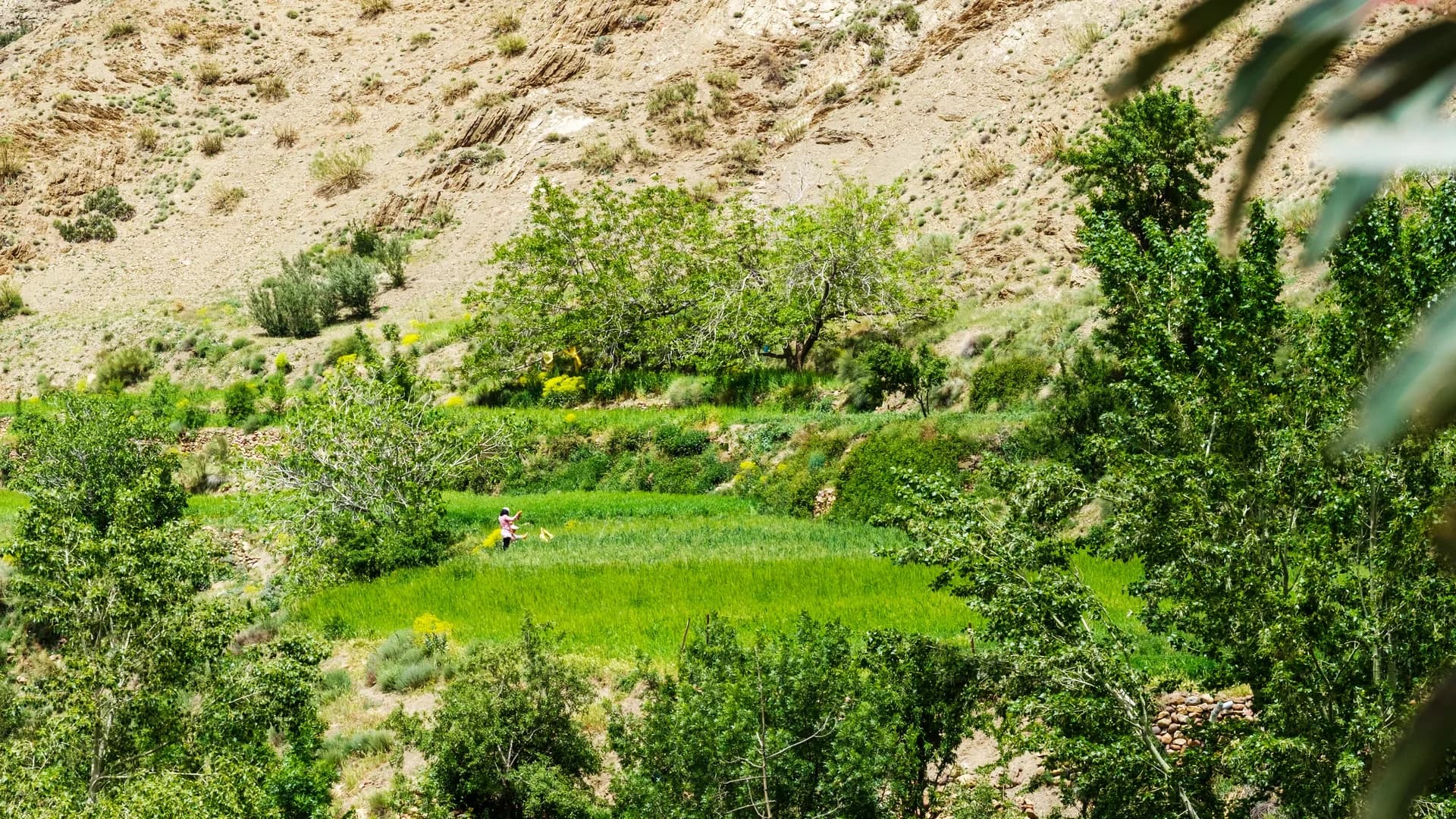
Favour a short route, with the option to turn back and a comfortable pace. A stroll through the village or a short walk to the waterfalls lets you test how you feel at altitude without any particular commitment.
What can a regular walker aim for?
You can consider more elevation gain, while keeping a margin for altitude and conditions. A loop to a neighbouring village such as Aroumd, or a half-day hike with a local guide, lets you progress without aiming for too ambitious a goal.
- ✓Expect generally between 3 and 5 hours of walking at this level
- ✓The altitude stays moderate, but can make itself felt by the end of the day
- ✓A guide remains useful for choosing a suitable route and avoiding navigation mistakes
What can an experienced hiker aim for?
Passes, neighbouring valleys and multi-day treks become accessible, provided you check conditions and stay honest about your real level in the face of altitude. This is the profile targeted by the multi-day treks in the Siroua massif or the valleys neighbouring Imlil, or even the ascent of Toubkal.
When should you choose a guide?
A guide is particularly useful for an unfamiliar route, a mixed-ability group or changing conditions. Beyond simple navigation, a local guide knows the variants of a route depending on the day's weather, the water points and the spots to rest in the shade.
- ✓For a route you don't yet know
- ✓For a group with different physical levels
- ✓For any outing beyond a simple stroll around the village
- ✓For a multi-day trek or the ascent of Toubkal, where guiding is essential
What really defines a hike's level?
- ✓The total walking time, not just the distance
- ✓The elevation gain and loss
- ✓The type of terrain: maintained trail, stones, uneven sections
- ✓The altitude reached and its effect on effort
- ✓The day's weather conditions
How can you picture the levels at a glance?
| Level | Typical duration | Example in Imlil |
|---|---|---|
| Beginner | 1 to 2 h | Stroll through the village or to the waterfalls |
| Regular | 3 to 5 h | Loop to a neighbouring village such as Aroumd |
| Experienced | 6 h and more, several days | Trek in the Siroua massif or ascent of Toubkal |
What common mistakes should you avoid?
- ✓Relying only on the stated distance without looking at the elevation gain
- ✓Underestimating the effect of altitude on effort, even on an otherwise moderate route
- ✓Setting off without checking the day's mountain weather
- ✓Not honestly communicating your real level to the guide before setting off
How do you progress from one level to the next?
There's no need to aim directly for a multi-day trek to discover hiking in Imlil. The most natural progression is to start with a short walk, then gradually lengthen the duration and elevation gain over successive outings, staying attentive to your recovery and how you feel at altitude.
From beginner to regular walker
Moving from a one-hour stroll to a half-day hike mainly requires stamina, not any particular technical skill.
From regular walker to experienced
This step generally involves accepting several consecutive hours of walking, more pronounced elevation gain, and for certain routes, a night in a refuge or under canvas.
Does a route suited to beginners guarantee a complete absence of difficulty?
Not completely. Even a route classed as easy can include an occasionally steeper section, a stony stretch, or a moment where the path runs alongside a more pronounced drop. The classification tells you about the route's general tendency, not the total absence of any occasional obstacle.
How do you honestly assess your own level before setting off?
The most common difficulty isn't physical but one of self-assessment: many travellers overestimate their current fitness, particularly after a long flight or several days of city sightseeing before arriving in Imlil. Ask yourself a few simple questions before choosing a route rather than relying solely on your usual sporting habits.
- ✓Have you already walked several hours at a stretch in the months before your trip?
- ✓How does your body usually react to altitude, even moderate altitude?
- ✓Does the rest of your group share the same level, or should you aim for the slowest person's pace?
- ✓Do you have a health condition that justifies discussing it with your guide before setting off?
Is a route's stated level always reliable?
Not entirely: the same route can seem easy to a local guide who walks it every week and much more demanding to a visitor unused to mountain walking. This is why a route's description (duration, elevation gain, terrain) remains more reliable than a general label like "easy" or "moderate", which always depends a little on who's giving it.
Frequently asked questions
What you need to know
Do you need to be fit to walk in Imlil?+
Not for every walk. You mainly need to choose a suitable route and honestly communicate your level.
How do you know if a route suits your level?+
Look at the total duration, the elevation gain and the type of terrain rather than the distance alone, and ask your guide for advice before setting off.
Can you change route along the way?+
A local guide can generally adapt the route if the group's pace or the conditions require it.
Does altitude change the difficulty you feel?+
Yes, altitude can make an effort harder than at low altitude, even on an otherwise moderate route.
What's the minimum level to consider Toubkal?+
Good physical condition and regular walking experience are recommended. This isn't a route for a first outing in the mountains.
Can children follow a hike in Imlil?+
Yes, on the shortest and least steep routes. Adapt the distance and plan regular breaks.
Does the hiking level change with the season?+
Yes, the same route can become more demanding in winter because of cold, snow or slippery sections, or more tiring in summer because of heat. The elevation gain and distance stay the same, but the effort felt varies.
What should you do if you feel worse than expected during a hike?+
Tell your guide immediately rather than pushing through. A local guide can adjust the pace, suggest a longer break, or shorten the planned route depending on the situation.
Does a poor fitness level stop you from enjoying Imlil at all?+
No. Even without particular fitness, a stroll through the village or a short walk lets you enjoy the valley's setting and atmosphere without aiming for a demanding route.
How does a guide assess a group's level before setting off?+
They generally ask concrete questions about your recent walking habits, any previous hikes and your ease in the mountains, rather than relying solely on your age or your stated fitness.
Is the required level the same for all routes in the same category?+
Not necessarily: two hikes classed as "regular" can differ noticeably depending on the exact elevation gain and terrain. Always ask for the precise details of the route rather than relying solely on its level label.